
Table of Contents
- Define the EMC Testing Scope First
- Budget for Pre-Compliance Testing
- Example EMC Budget Structure
- Work With an EMC Testing Partner Early
EMC Testing in Product Development should be treated as a planned engineering activity rather than an expense added at the end of a project. Electromagnetic compatibility testing helps determine whether an electronic product can operate as intended without creating unacceptable electromagnetic interference or being excessively affected by electromagnetic disturbances. Building EMC considerations into the development budget early can reduce unexpected redesign, retesting, and schedule delays.
The actual cost of EMC testing varies considerably because there is no single test package that applies to every product. The required testing depends on the product category, intended market, operating environment, power source, interfaces, wireless functions, applicable standards, and certification route. For example, a simple electronic device may require a different test program from industrial equipment, automotive electronics, medical equipment, or wireless products.
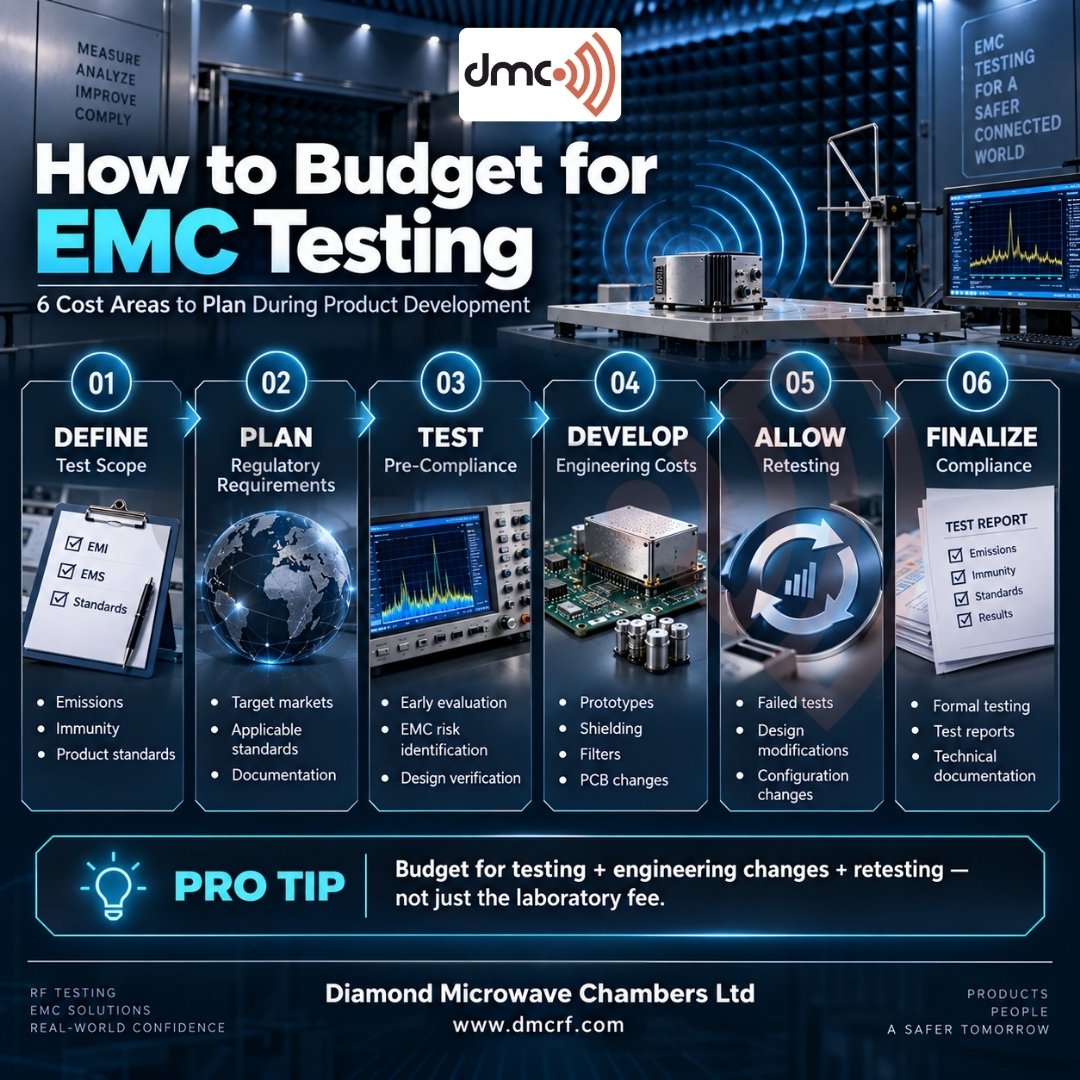
Define the EMC Testing Scope First
The first step in preparing an EMC budget is identifying what needs to be tested. Testing should be based on the product’s intended application and the regulatory markets where it will be sold.
Depending on the product, the budget may need to account for:
- Radiated emissions testing
- Conducted emissions testing
- Electrostatic discharge immunity
- Radiated RF immunity
- Electrical fast transient/burst testing
- Surge testing
- Conducted RF immunity
- Voltage dips and interruptions
- Harmonic current or flicker testing
- Product-specific EMC requirements
IEC 61000-4-2:2025, for example, specifies methods and procedures for evaluating immunity to electrostatic discharge, while IEC 61000-4-3:2020 covers immunity to radiated radio-frequency electromagnetic fields. The exact tests and severity levels depend on the applicable product or family standard.
This is why obtaining a defined test plan before requesting laboratory quotations is important.
Identify the Target Markets and Regulations
Your EMC budget should reflect where the product will be sold. Different markets can have different regulatory frameworks, documentation requirements, and conformity procedures.
For products entering the European market, EMC requirements are addressed by Directive 2014/30/EU. The manufacturer’s conformity assessment involves considering relevant electromagnetic phenomena and documenting the applicable requirements, standards, assessment results, and test reports.
Other markets may involve requirements from organizations such as the FCC in the United States or national and regional regulatory authorities elsewhere.
Before setting a budget, identify:
- Countries or regions where the product will be marketed
- Applicable product regulations
- Applicable EMC standards
- Certification or declaration requirements
- Required technical documentation
- Whether wireless or radio requirements also apply
A broader market strategy can mean a broader testing program.
Budget for Pre-Compliance Testing
Pre-compliance testing can be useful during product development because it allows engineers to identify potential EMC problems before formal compliance testing.
Instead of waiting until the final prototype, teams can evaluate areas such as:
- PCB emissions
- Cable radiation
- Grounding problems
- Shielding effectiveness
- Power-supply noise
- Filter performance
- Enclosure design
- Product susceptibility to external RF fields
Pre-compliance testing does not automatically replace formal compliance testing. Its value is that it can provide engineering information earlier, when design changes are generally easier to implement.
For this reason, a practical EMC budget should contain a separate allowance for development-stage investigation as well as final testing.
Include Prototype and Engineering Costs
Laboratory testing is only one part of the overall EMC budget. Product development teams also need to consider the engineering work required before and after testing.
Potential costs include:
- Prototype construction
- Engineering samples
- Cable and accessory configurations
- Test fixtures
- Shielding modifications
- Filters and ferrites
- PCB revisions
- Grounding changes
- Enclosure modifications
- Engineering analysis
- Laboratory retesting
A product that requires several hardware revisions may ultimately cost more to qualify than one that passes with minimal changes.
Example EMC Budget Structure
| Budget Area | Typical Planning Consideration |
|---|---|
| Standards review | Identify applicable requirements |
| Pre-compliance testing | Early emissions and immunity investigation |
| Formal EMC testing | Laboratory compliance assessment |
| Test fixtures | Product-specific setup requirements |
| Prototype units | Dedicated samples for testing |
| Engineering modifications | Filters, shielding, grounding, PCB changes |
| Retesting | Allowance for failed or modified tests |
| Documentation | Reports and technical compliance records |
| Contingency | Unexpected engineering or testing requirements |
These are budget categories rather than fixed prices. Actual laboratory and engineering costs vary by product, location, test scope, laboratory, standard, and number of configurations.
Keep a Retest Allowance
One of the most important parts of an EMC testing budget is the retest allowance.
A failed test does not necessarily mean that the entire product has failed permanently. Engineers may identify the source of an emissions peak or immunity problem and introduce a corrective measure. The modified product may then require another evaluation.
Potential reasons for retesting include:
- Excessive radiated emissions
- Conducted emissions above the applicable limit
- ESD-related malfunction
- RF immunity problems
- Cable-related emissions
- Power-supply noise
- Insufficient shielding
- Changes to PCB layout
- Hardware or firmware modifications
Setting aside a contingency budget can prevent these engineering changes from disrupting the overall project plan.
Consider the Cost of Product Complexity
Product complexity can significantly influence EMC testing requirements.
A product with multiple interfaces, motors, switching power supplies, high-speed digital electronics, long cables, wireless radios, or multiple operating modes may require a more extensive assessment.
During budgeting, document:
- Number of product configurations
- Input and output interfaces
- Cable types and lengths
- Power configurations
- Operating modes
- Internal clock frequencies
- Wireless technologies
- External accessories
- Maximum-load conditions
Testing representative configurations is important because the EMC assessment should reflect the product’s intended operating conditions.
Work With an EMC Testing Partner Early
Working with an experienced EMC testing organization during the design stage can help product teams understand the required test scope and prepare appropriate prototypes.
Diamond Microwave Chambers Ltd supports RF and EMC testing infrastructure and related chamber solutions for organizations developing and testing electronic products. Early technical discussions can help teams consider the testing environment, chamber requirements, RF absorber solutions, shielding, and test configuration before formal testing begins.
For organizations planning their own EMC test facilities, chamber design and installation should also be treated as a separate capital expenditure rather than combined with the cost of individual product certification tests.
Build EMC Testing Into the Development Timeline
Budgeting and scheduling should work together. Testing too late can create additional engineering pressure.
A practical development sequence can be:
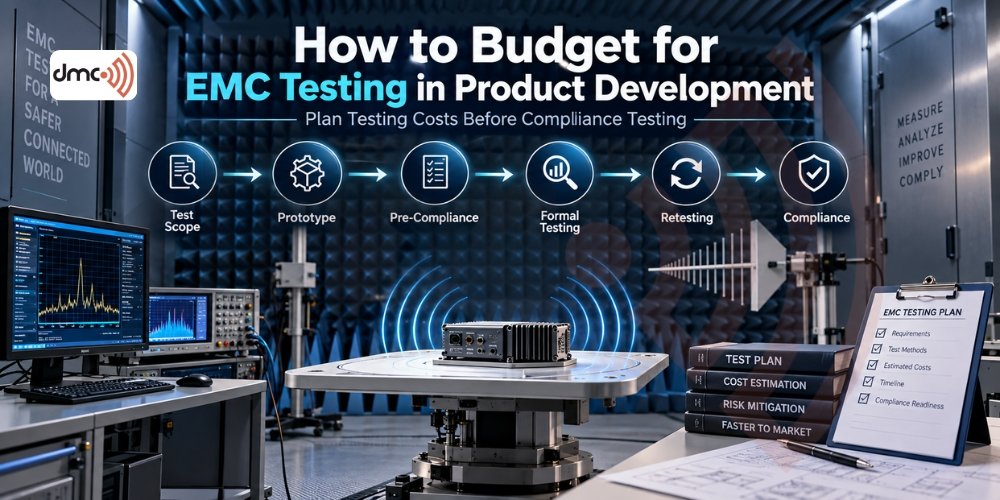
Product Requirements → EMC Risk Review → Prototype → Pre-Compliance Testing → Design Improvements → Formal EMC Testing → Retest if Required → Documentation
This approach gives engineering teams opportunities to identify problems before the final compliance stage.
Pro Tip
Do not budget only for the laboratory test day. Include pre-compliance investigation, prototypes, engineering modifications, test fixtures, documentation, and a realistic retest contingency. A complete EMC budget provides a better picture of the actual cost of bringing a compliant product to market.
Review the Budget Before Final Prototype Release
Before sending the final product for compliance testing, conduct an EMC budget review. Confirm that the test plan, applicable standards, product configuration, accessories, cables, and operating modes have been identified.
Also verify that the selected laboratory can perform the required measurements and provide documentation appropriate for your compliance process.
Standards can change over time. For example, IEC lists IEC 61000-4-2:2025 as the current edition of its ESD immunity standard, replacing the 2008 edition. This illustrates why teams should confirm the applicable edition rather than automatically relying on an older internal test specification.
Conclusion
Planning the budget for EMC Testing in Product Development requires more than estimating a laboratory testing fee. The complete budget should consider standards identification, pre-compliance evaluation, prototypes, formal testing, engineering corrections, retesting, documentation, and contingency.
By considering EMC requirements early, product development teams can integrate electromagnetic compatibility into the engineering process instead of treating it as a final-stage obstacle. Careful planning also helps create more predictable development schedules and clearer compliance costs.
Diamond Microwave Chambers Ltd can support organizations that require professional RF and EMC testing environments, chamber solutions, shielding systems, and related infrastructure for demanding test applications.
Frequently Asked Questions
EMC testing costs depend on the product type, applicable standards, number of tests, product configurations, laboratory requirements, market regulations, and whether retesting is required.
Yes. EMC testing should be included from the planning stage because pre-compliance testing, formal testing, engineering modifications, and potential retesting can all affect the total development cost.
It is not universally mandatory, but it can be valuable for identifying EMC problems before formal compliance testing. The appropriate approach depends on the product, risk level, and development strategy.
A comprehensive budget can include standards review, pre-compliance testing, formal laboratory testing, prototypes, fixtures, engineering modifications, documentation, and a retest contingency.
Yes. Applicable standards, editions, regulatory requirements, or product configurations may change. Teams should verify the applicable requirements and standards edition before final compliance testing.