
Table of Contents
- Why EMC Testing Matters for Medical Wearables
- Why Wearable Health Devices Need EMC Testing
- EMC Challenges for Implantable Medical Devices
- Future Trends in Medical EMC Testing
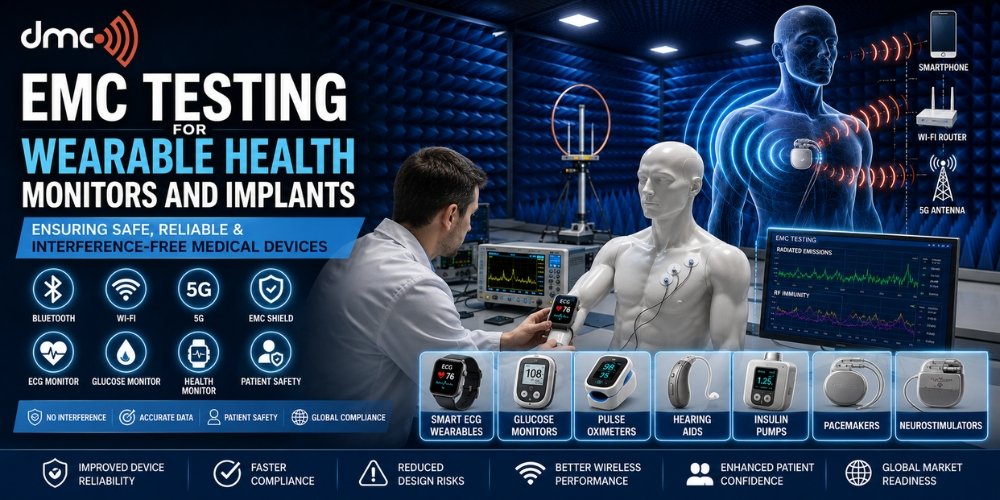
EMC Testing plays a critical role in ensuring these medical devices operate safely in environments filled with electromagnetic signals. Wireless routers, smartphones, 5G networks, Bluetooth devices, MRI systems, and industrial equipment all generate electromagnetic energy that can interfere with sensitive medical electronics.
At Diamond Microwave Chambers Ltd, we design advanced EMC anechoic chambers and RF testing solutions that help manufacturers evaluate electromagnetic compatibility, minimize interference, and support compliance with international medical standards.
This guide explains the key principles, design considerations, components, applications, and best practices involved in designing anechoic chambers for antenna testing.
Why EMC Testing Matters for Medical Wearables
Unlike consumer electronics, wearable medical devices directly influence patient health. A temporary malfunction caused by electromagnetic interference could result in inaccurate readings or delayed treatment decisions.
EMC testing verifies that a device can:
- Operate correctly near wireless communication systems
- Resist electromagnetic interference (EMI)
- Avoid emitting excessive electromagnetic noise
- Maintain measurement accuracy
- Continue functioning under real-world RF exposure
- Meet international regulatory requirements
Reliable EMC performance ultimately improves patient safety and device reliability.
What is EMC?
Electromagnetic Compatibility (EMC) is the ability of an electronic device to operate properly without causing or suffering unacceptable electromagnetic interference.
EMC consists of two major categories.
1. Emissions Testing
Measures the electromagnetic energy produced by the device.
The objective is to ensure the device does not interfere with:
- Nearby medical equipment
- Hospital communication systems
- Wireless networks
- Consumer electronics
- Other wearable devices
2. Immunity Testing
Evaluates whether the device continues operating correctly when exposed to electromagnetic disturbances.
Typical immunity tests include:
- Radiated RF immunity
- Electrostatic discharge (ESD)
- Conducted disturbances
- Electrical fast transients
- Voltage dips
- Magnetic field immunity
- Surge immunity
Why Wearable Health Devices Need EMC Testing
Medical wearables continuously communicate using wireless technologies.
Common wireless interfaces include:
- Bluetooth
- Wi-Fi
- NFC
- Cellular LTE
- 5G
- Zigbee
- Proprietary RF links
These technologies improve patient monitoring but also increase susceptibility to electromagnetic interference.
Without proper EMC testing, devices may experience:
- False health readings
- Lost wireless connections
- Reduced battery performance
- Software resets
- Sensor instability
- Data corruption
For implantable medical devices, these failures could have serious clinical consequences.
Common Wearable Devices That Require EMC Testing
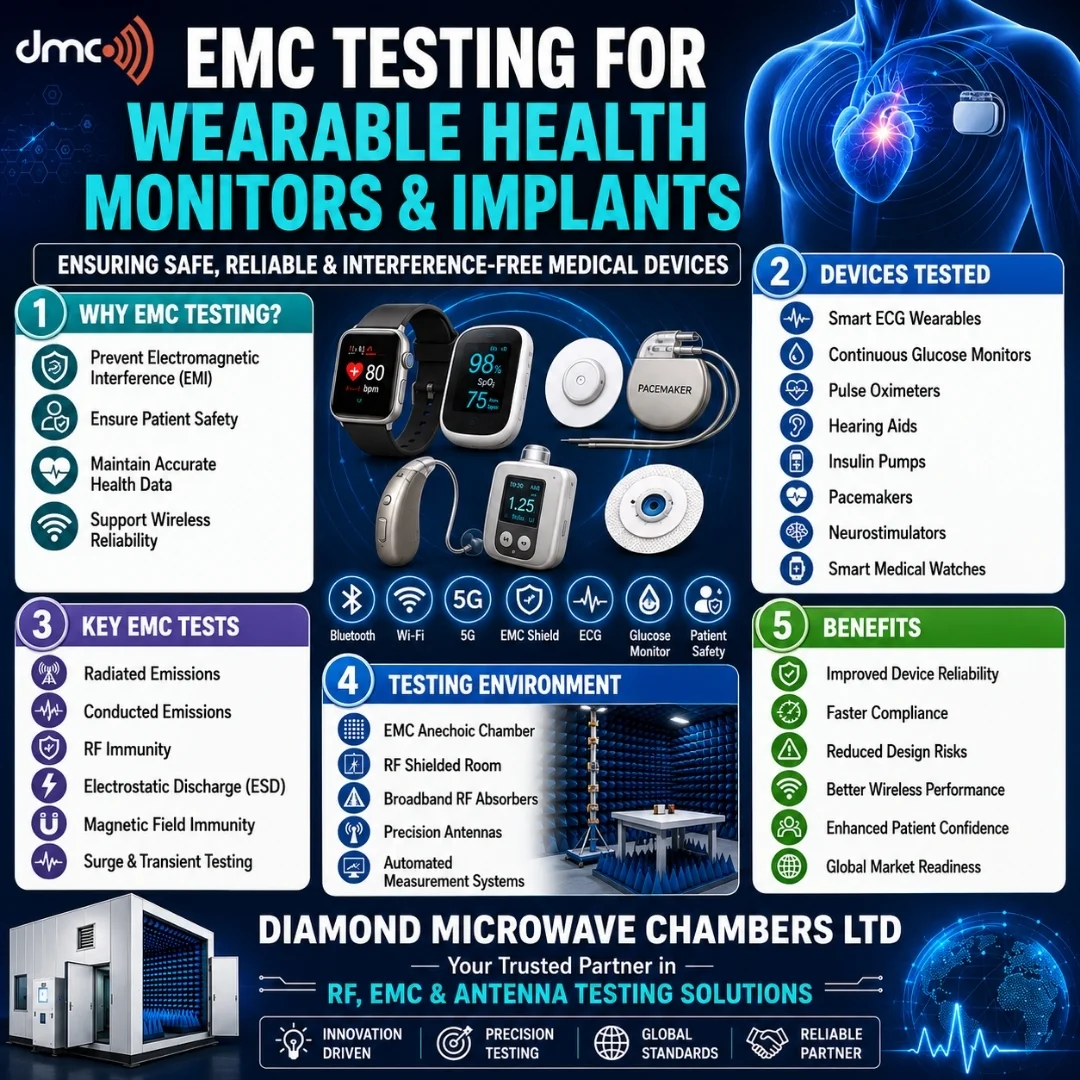
| Device | Why EMC Testing is Required |
|---|---|
| Continuous Glucose Monitor (CGM) | Accurate Glucose Measurements |
| ECG Wearables | Stable Cardiac Signal Monitoring |
| Blood Pressure Monitors | Reliable Measurements |
| Pulse Oximeters | Oxygen Level Accuracy |
| Smart Medical Watches | Wireless Coexistence |
| Hearing Aids | RF Immunity |
| Neurostimulators | Patient Safety |
| Implantable Cardiac Devices | Critical Life-Support Reliability |
| Insulin Pumps | Prevent Dosage Interruption |
| Remote Patient Monitoring Devices | Continuous Communication |
EMC Challenges for Implantable Medical Devices
Implantable devices face even greater EMC challenges because they function inside the human body while communicating wirelessly with external equipment.
Examples include:
- Cardiac pacemakers
- Implantable defibrillators
- Cochlear implants
- Neurostimulators
- Drug delivery pumps
Potential interference sources include:
- Smartphones
- Airport security systems
- MRI scanners
- Wireless chargers
- Industrial machinery
- Medical imaging systems
- 5G infrastructure
Manufacturers must verify that implants continue operating safely under these exposure conditions.
International EMC Standards for Medical Devices
Several internationally recognized standards define EMC requirements for medical electronics.
IEC 60601-1-2
Widely recognized EMC standard for medical electrical equipment.
It covers:
- Radiated emissions
- Conducted emissions
- Immunity testing
- Electrostatic discharge
- RF immunity
- Power disturbances
ISO 14117
Focuses specifically on implantable medical devices exposed to electromagnetic fields.
CISPR Standards
Provide limits for electromagnetic emissions to reduce interference with nearby equipment.
FDA and MDR Requirements
Medical device manufacturers seeking approval in different markets often demonstrate EMC compliance as part of regulatory submissions.
Typical EMC Testing Process
Manufacturers generally follow a structured testing process.
- Step 1: Design review
- Step 2: Pre-compliance EMC evaluation
- Step 3: Radiated emissions testing
- Step 4: Conducted emissions testing
- Step 5: Radiated immunity testing
- Step 6: Electrostatic discharge testing
- Step 7: Performance verification
- Step 8: Final compliance certification
Early EMC testing helps identify design issues before production, reducing redesign costs and development delays.
Why EMC Chambers are Essential
Accurate EMC measurements require highly controlled environments.
EMC anechoic chambers provide:
- RF isolation
- Low background noise
- Controlled reflections
- Stable measurement conditions
- Repeatable testing
- Accurate antenna measurements
Without a controlled chamber, environmental interference may produce inconsistent or misleading results.
Pro Tip
Perform pre-compliance EMC testing early in the design phase rather than waiting for final certification. Identifying electromagnetic issues before hardware production can significantly reduce redesign costs, shorten development timelines, and improve the likelihood of passing formal compliance testing on the first attempt.
How Diamond Microwave Chambers Ltd Supports Medical EMC Testing
Diamond Microwave Chambers Ltd provides advanced RF and EMC testing solutions for manufacturers developing wearable and implantable medical devices.
Our solutions support:
- EMC anechoic chambers
- RF shielded rooms
- OTA testing environments
- RF absorber systems
- Custom EMC chamber design
- Turnkey RF measurement solutions
- Antenna measurement systems
- Medical device EMC research facilities
Our engineering expertise helps organizations create accurate, repeatable, and standards-oriented EMC testing environments for next-generation healthcare technologies.
Future Trends in Medical EMC Testing
Medical electronics continue to evolve with emerging technologies such as:
- AI-powered health monitoring
- Remote patient care
- 5G-connected medical devices
- Internet of Medical Things (IoMT)
- Smart implants
- Wireless charging
- Digital therapeutics
- Continuous biometric monitoring
As wireless connectivity becomes more widespread, EMC testing will remain essential to ensure these innovations operate safely in increasingly complex electromagnetic environments.
Conclusion
The growth of wearable healthcare technology and implantable medical devices has made electromagnetic compatibility more important than ever. Devices must perform reliably despite constant exposure to wireless communication systems, consumer electronics, and hospital equipment.
EMC Testing helps manufacturers verify that their products are both safe and dependable while supporting compliance with recognized international standards. From emissions and immunity testing to controlled chamber environments, every stage contributes to improved patient safety and product quality.
By investing in advanced EMC testing infrastructure, manufacturers can reduce development risks, streamline certification, and bring reliable medical innovations to market with confidence. Diamond Microwave Chambers Ltd delivers the RF and EMC chamber solutions needed to support this critical testing process.
Frequently Asked Questions
It creates a controlled environment that minimizes reflections and external RF interference, enabling accurate antenna measurements.
RF absorbers reduce internal reflections, helping simulate free-space conditions for reliable antenna testing.
Telecommunications, aerospace, automotive, defense, satellite communications, research institutions, and electronics manufacturers commonly use them.
Chamber size depends on antenna dimensions, operating frequency, required measurement distance, and testing methodology.
Yes. A well-designed chamber can accommodate evolving technologies by considering broader frequency ranges and scalable system integration during the design phase.