
Table of Contents
- Why Safety Matters in an RF Anechoic Chamber
- Safety Rules at a Glance
- Routine Anechoic Chamber Maintenance
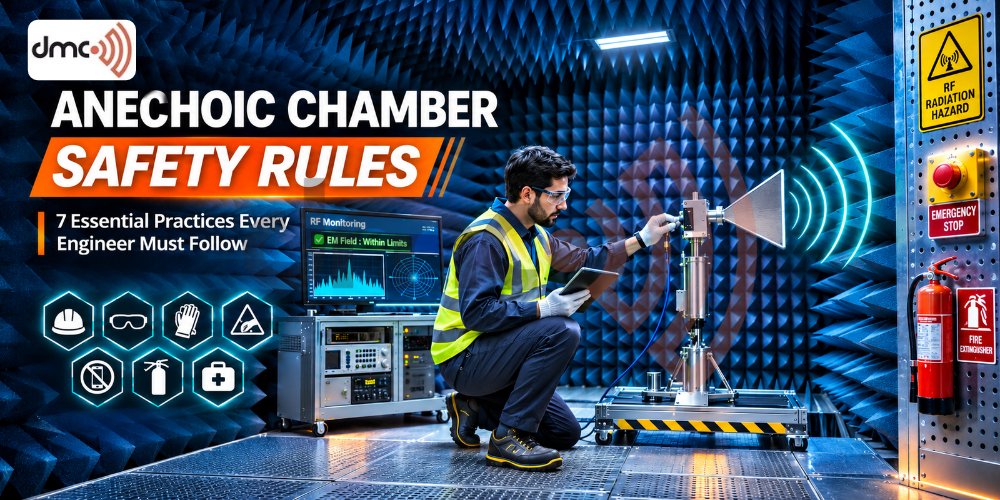
The core safety rules for working inside an anechoic chamber are to control who enters, keep RF exposure limits in check, protect the RF absorber lining from fire and damage, wear the right personal protective equipment, and know the emergency procedures before you walk in. Each rule is covered below.
Why Safety Matters in an RF Anechoic Chamber
An RF anechoic chamber is a shielded room lined with absorbing material. It is built to remove reflections so engineers can run clean antenna measurement tests. That design also creates hazards you will not find in a normal lab. The room is dark, the floor is uneven, the walls are fragile, and the lining can burn. Transmitting equipment may also be running a few metres from you.
Good anechoic chamber safety protects three things: the people inside, the expensive absorber lining, and the accuracy of your test results.
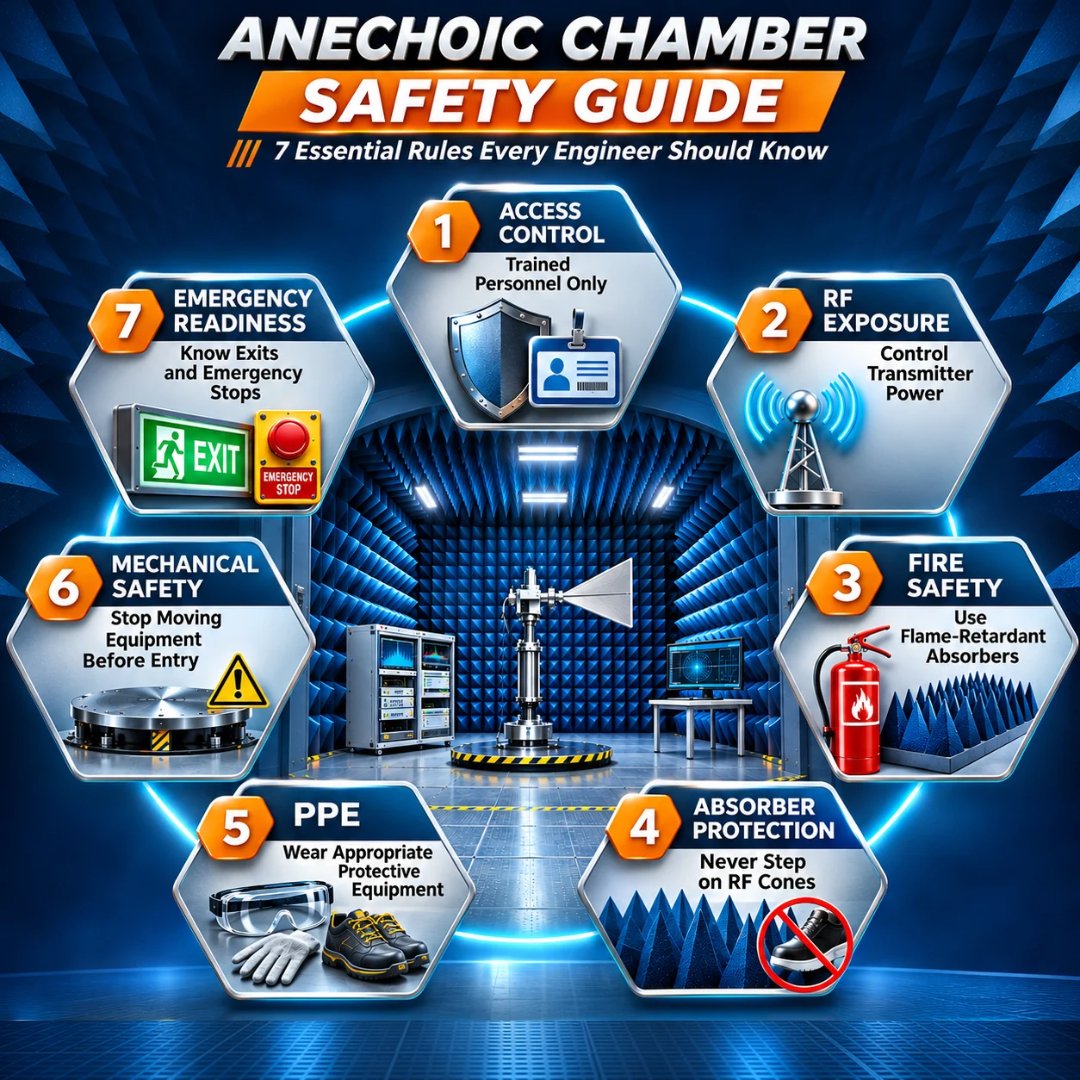
1. Control Access to the Chamber
Only trained staff should enter. Set up a simple chamber access control routine:
- Keep a sign-in log for every entry
- Post warning lights outside the door that show when transmitters are active
- Never allow solo entry during live testing
- Brief visitors on the rules before they go in
2. Manage RF Exposure Levels
Most test setups use low power, but some radar, 5G, and 6G research systems can push enough power to matter. Check your transmit levels against the RF exposure limits set by standards bodies such as ICNIRP and IEEE.
Switch off or lower transmitters before anyone enters. Use interlocks that cut RF output when the door opens. If power levels are high, measure field strength with a calibrated meter first and never assume the room is safe.
3. Follow Fire Safety Rules
Fire is the most serious risk in these rooms. Standard polyurethane foam burns easily, and a small spark or hot surface can set off a fire that spreads through the lining.
- Choose pyramidal absorbers that are rated flame retardant
- Keep high-power transmitters away from absorbers that are not rated for the load
- Ban open flames, heaters, and soldering inside the chamber
- Fit smoke detection and a suitable suppression system
- Never leave high-power equipment running unattended
Foam fires also release toxic smoke, so a fire plan matters as much as the prevention steps.
4. Protect the RF Absorber from Damage
An RF absorber is delicate. Standing or stepping on the cones crushes them and changes how the chamber performs. Damaged cones cause reflections that quietly ruin test data.
Use the walkway panels or a cover over the floor absorbers. Do not lean ladders or tools against the walls. Keep sharp objects, food, and drinks outside the room.
5. Wear the Right Personal Protective Equipment
Basic personal protective equipment keeps you safe and keeps the room clean:
- Anti-static shoe covers or clean-room shoes
- Safety glasses when handling absorber cutting or repair
- Dust masks during absorber repair work, since fibres and carbon-loaded foam shed particles
- Gloves for handling sharp mounting hardware
6. Watch for Mechanical and Lighting Hazards
Positioners, turntables, and masts move with real force. Always stop motion before you step near them. Because the room is lit dimly to protect the lining, use good task lighting and mark trip hazards clearly. Cables should run along fixed paths, not across the walkway.
7. Know the Emergency Procedures
Every person who enters should know where the exits, emergency stop buttons, and fire extinguishers are. Shielded doors are heavy, so a clear manual release matters. Run a short drill at least once a year, and post the emergency procedures inside and outside the room.
Safety Rules at a Glance
| Hazard | Risk | Safety Rule |
|---|---|---|
| RF radiation | Heating, health exposure | Power down transmitters, use interlocks, check RF exposure limits |
| Fire | Rapid spread through foam | Use flame-retardant pyramidal absorbers, ban heat sources |
| Absorber damage | Poor test accuracy | Use walkway covers, never step on cones |
| Moving equipment | Crush or impact injury | Stop positioners before entry |
| Poor lighting | Trips and falls | Use task lighting, route cables safely |
| Emergencies | Delayed exit or response | Post exit maps, run yearly drills |
Pro Tip: Add a written pre-entry checklist at the chamber door covering transmitter status, absorber condition, and exit clearance. Teams that tick through it each time catch most problems before they become incidents, and it also gives you a record for audits.
Routine Anechoic Chamber Maintenance
Regular anechoic chamber maintenance supports safety as much as performance. Inspect absorbers every quarter for cracks, burn marks, and compressed tips. Test door seals, interlocks, and smoke detectors on a schedule. Log every repair so you can spot patterns early. If a fire or major damage occurs, bring in a qualified chamber specialist before you resume testing.
Working safely in an anechoic chamber comes down to a few habits: limit access, control RF power, protect the lining, wear proper gear, and rehearse the emergency plan. Build these into your daily routine and your antenna measurement results stay reliable.
Frequently Asked Questions
Limit access to trained staff, power down or limit transmitters, keep ignition sources out, avoid stepping on absorbers, wear proper PPE, and know the emergency exits and procedures.
It is safe when used correctly. The main risks are RF exposure at high power, fire in the absorber lining, trips in low light, and moving test equipment.
Yes. Foam absorbers can burn if hit by high power or a heat source. Using flame-retardant pyramidal absorbers and fire detection reduces the risk a great deal.
Yes. Anti-static footwear, gloves, safety glasses, and dust masks for repair work are standard, depending on the task.
Check absorbers, door seals, interlocks, and fire systems at least every quarter, with a full professional review each year.