
Table of Contents
- Why Does an Anechoic Chamber Need Future-Ready Design
- 7 Design Margins That Make a Difference
- Important Design Margins to Consider
- How DMC Supports Future-Ready RF and EMC Facilities
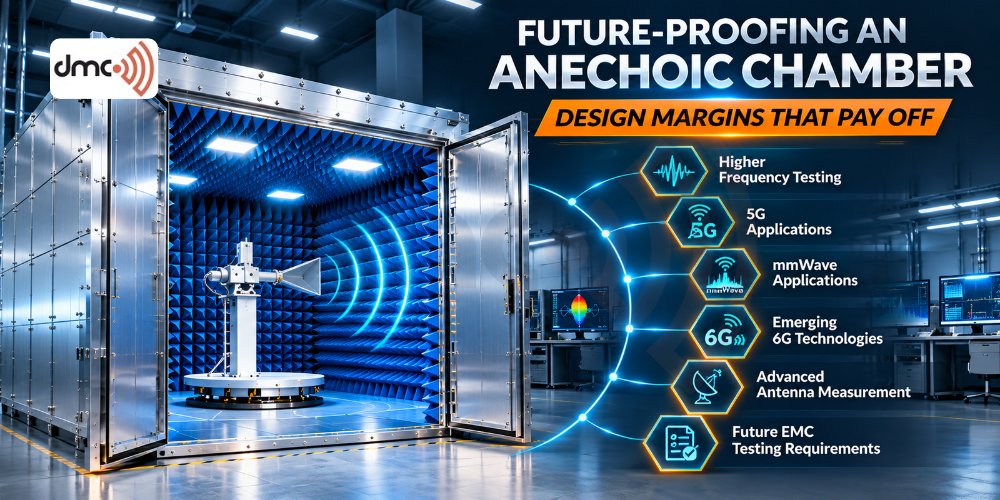
Technology is advancing rapidly, and testing requirements are changing alongside it. From 5G and emerging 6G research to automotive radar, satellite communications and advanced antenna systems, modern laboratories need reliable testing environments that can support evolving requirements. This makes future-proofing an anechoic chamber an important consideration when planning a new facility.
A well-planned anechoic chamber design should do more than meet today’s testing specifications. It should also provide sufficient flexibility for future frequency ranges, larger equipment, changing antenna configurations and new measurement technologies. Investing in the right anechoic chamber design margins during the initial planning stage can reduce expensive modifications and extend the useful life of the facility.
Why Does an Anechoic Chamber Need Future-Ready Design?
An anechoic chamber is a controlled environment designed to minimize unwanted electromagnetic reflections. It helps engineers perform accurate antenna measurements, radiation pattern analysis, electromagnetic compatibility testing and other RF evaluations.
However, testing requirements rarely remain unchanged throughout a chamber’s operational life.
For example, a laboratory currently performing sub-6 GHz measurements may eventually need to support mmWave testing. An automotive testing facility may move from basic component testing to advanced radar and vehicle-level evaluations.
Without sufficient planning, these changes can require major structural modifications.
A future-ready RF anechoic chamber considers potential developments before construction begins. This includes selecting appropriate absorber materials, allowing room for additional equipment and planning electrical, mechanical and ventilation infrastructure.
7 Design Margins That Make a Difference
1. Plan for Wider Frequency Coverage
Frequency requirements should be one of the first considerations during chamber design. Instead of selecting a frequency range based only on current projects, engineers should evaluate possible future applications.
Higher-frequency testing may require different absorber performance, tighter installation tolerances and improved measurement arrangements.
Selecting suitable RF absorber materials with an appropriate operating frequency range can help laboratories accommodate evolving requirements.
The final specification should be based on measured absorber performance and the intended test environment rather than assumptions about future compatibility.
2. Allow Additional Physical Space
Equipment dimensions and testing configurations can change over time. A chamber designed with extremely limited space may become difficult to upgrade.
Consider additional clearance for antenna positioning systems, robotic equipment, larger devices under test and maintenance access.
For facilities using antenna measurement systems, sufficient room for positioners, cables and mechanical movement is particularly important.
A practical layout should consider future equipment dimensions, door access and safe movement inside the chamber.
3. Design for Higher Shielding Performance
Shielding performance is another important factor in long-term chamber reliability.
A properly designed EMC anechoic chamber should provide suitable electromagnetic isolation for its intended testing applications.
Engineers should evaluate the shielding requirements, door interfaces, ventilation openings, cable penetrations and filter arrangements during the planning stage.
Where future requirements are expected to become more demanding, additional design margin may help avoid costly modifications.
However, shielding effectiveness must be validated through appropriate measurements and applicable testing procedures.
4. Select Absorbers with Long-Term Performance in Mind
Absorber selection influences chamber performance, maintenance requirements and future testing capabilities.
Pyramidal, hybrid and ferrite absorber solutions serve different frequency ranges and testing applications.
Rather than selecting materials based only on initial cost, laboratories should evaluate their operating frequency range, reflectivity, durability, environmental conditions and replacement requirements.
A carefully selected absorber system can support consistent chamber performance throughout its service life.
5. Prepare Infrastructure for Future Equipment
Modern RF laboratories depend on more than shielding and absorbers. Power distribution, data connections, cable routing, ventilation, cooling and control systems also influence operational flexibility.
Providing spare cable pathways, accessible service points and suitable electrical capacity can simplify future equipment integration.
These considerations are particularly valuable for laboratories expecting automation, remote operation or advanced measurement systems.
6. Consider Modular and Upgrade-Friendly Construction
Modular construction can make future modifications more manageable.
Depending on the chamber configuration, replaceable absorber sections, accessible cable routes, modular panels and adaptable mounting arrangements can reduce disruption during upgrades.
A modular RF testing chamber may also allow laboratories to expand selected components without rebuilding the entire facility.
The right approach depends on the application, available space and required shielding performance.
7. Include Maintenance and Validation Access
Future-proofing should also account for regular inspection and performance verification.
Absorbers, door seals, grounding connections, cable penetrations and mechanical systems should remain accessible for maintenance.
A practical maintenance strategy helps identify deterioration before it affects testing results.
Periodic performance checks should follow the applicable test methods and laboratory quality procedures.
Important Design Margins to Consider
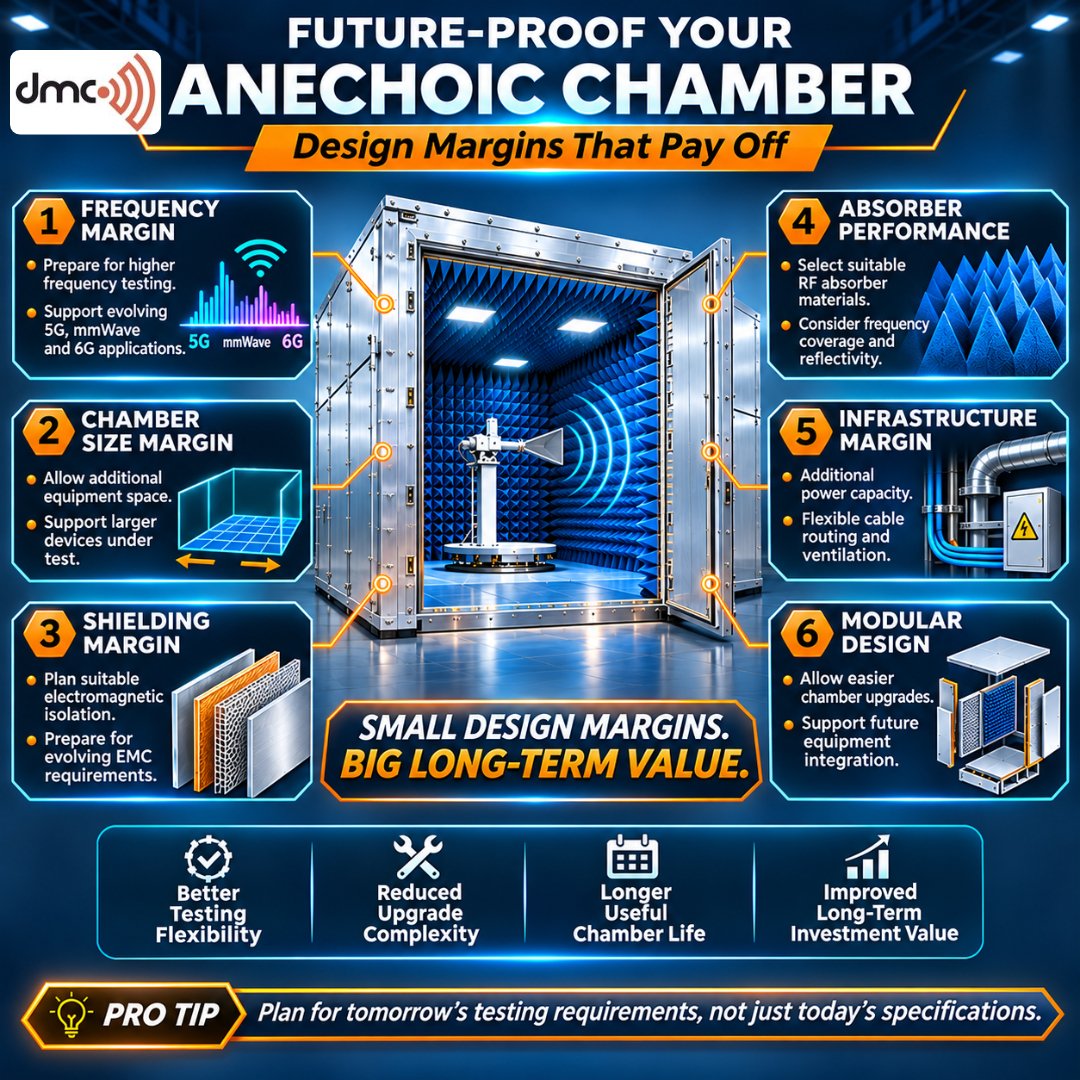
The following table highlights areas where additional planning can improve long-term chamber flexibility.
| Design area | Planning consideration | Long-term benefit |
|---|---|---|
| Frequency range | Evaluate future testing bands | Easier application expansion |
| Chamber dimensions | Allow equipment clearance | Flexible test configurations |
| Shielding | Specify suitable performance margins | Reduced modification requirements |
| RF absorbers | Select application-appropriate materials | Consistent RF performance |
| Infrastructure | Provide spare pathways and capacity | Easier equipment integration |
| Construction | Consider modular components | Simplified upgrades |
| Maintenance | Ensure inspection accessibility | Better operational reliability |
These are planning considerations, not universal numerical specifications. Actual margins should be determined through engineering calculations, project requirements and validated testing.
Pro Tip: Think Beyond Your First Testing Requirement
Before finalizing an anechoic chamber specification, prepare a five-to-ten-year technology roadmap.
Identify possible future frequency bands, larger equipment configurations, additional antenna systems and changing compliance requirements. Discuss these needs with your chamber manufacturer before construction.
A small investment in additional space, infrastructure and flexibility during the initial design stage can prevent much larger expenses later.
How DMC Supports Future-Ready RF and EMC Facilities
Diamond Microwave Chambers (DMC) provides RF and EMC chamber solutions designed around specific testing requirements.
From absorber selection and shielding arrangements to chamber configurations and antenna measurement environments, proper engineering planning is essential for reliable results.
When developing a new facility or upgrading an existing one, working with an experienced manufacturer helps ensure that important design considerations are addressed before installation.
The goal is not simply to build a chamber that works today. It is to develop a testing environment that can adapt as technology and engineering requirements evolve.
Conclusion
Future-proofing an anechoic chamber begins long before installation. Frequency coverage, physical dimensions, shielding, absorber selection, infrastructure and maintenance access all influence its long-term value.
By including practical design margins during the planning stage, laboratories can reduce upgrade costs, improve operational flexibility and prepare for emerging testing technologies.
A well-engineered anechoic chambers design is therefore not just an investment in current testing capabilities. It is an investment in future readiness.
Frequently Asked Questions
It means designing a chamber to support future testing needs, frequency upgrades, and advanced equipment.
They reduce upgrade costs, improve flexibility, and support changing testing requirements.
Yes, with suitable frequency coverage, absorbers, quiet-zone design, and measurement equipment.
Proper absorber selection improves RF absorption, reduces reflections, and supports wider frequency coverage.
Consider frequency range, chamber size, quiet zone, RF shielding, absorbers, equipment, and future expansion.