
Table of Contents
- Why Shielding Matters in Military Communication Equipment
- Key Military Communication Equipment Shielding Standards
- Understanding RF Shielding Effectiveness
- Best Practices for Reliable Military EMC Performance
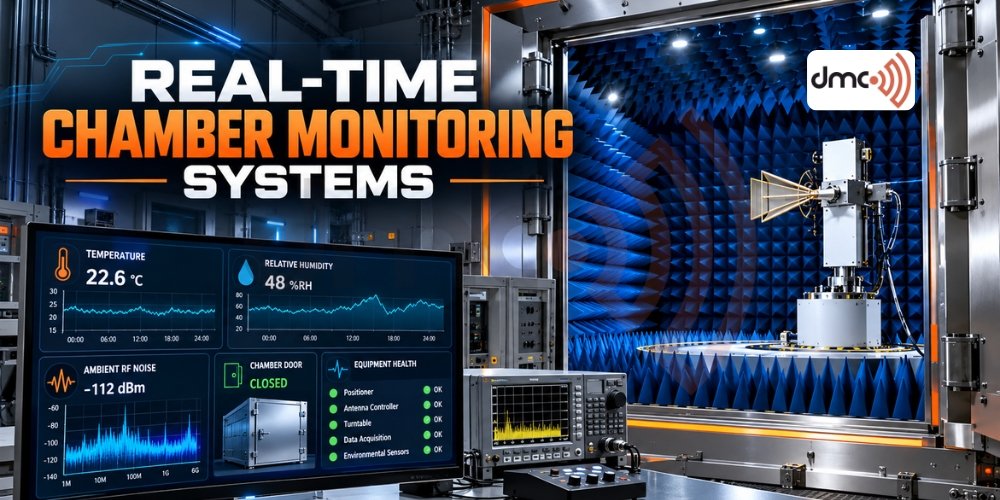
Real-time chamber monitoring systems help testing laboratories track important operating conditions and identify unexpected changes during EMC and antenna measurements. For facilities using anechoic chambers, RF shielded enclosures and antenna measurement systems, reliable monitoring supports consistent test conditions, equipment protection and better operational control. Diamond Microwave Chambers Ltd recognises the importance of maintaining a suitable testing environment when precision and repeatability matter.
Understanding how these systems work helps engineers select appropriate monitoring technologies, identify potential problems earlier and maintain useful records throughout a testing programme.
What Are Real-Time Chamber Monitoring Systems?
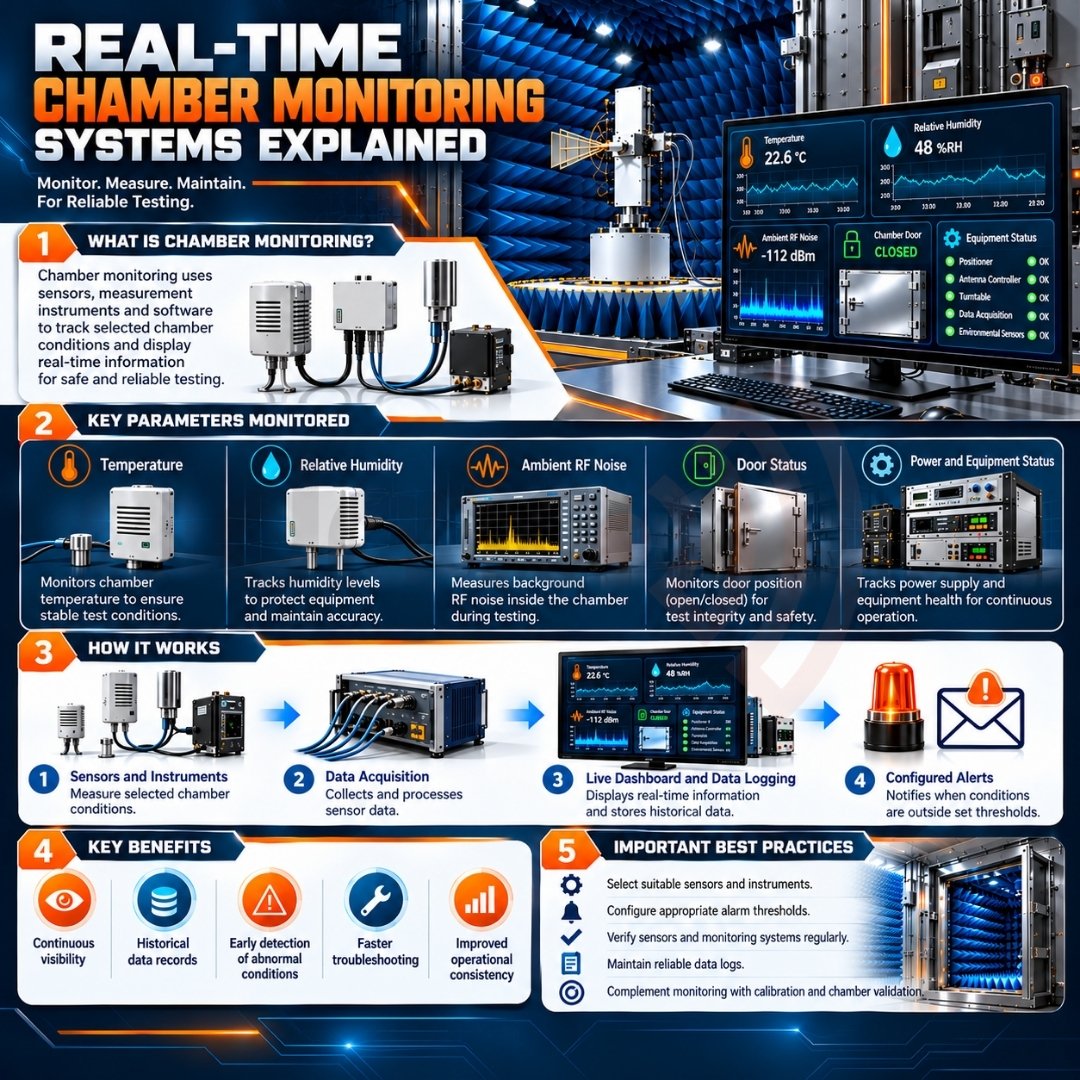
A real-time chamber monitoring system combines suitable sensors, data acquisition hardware and monitoring software to collect and display information about selected chamber conditions. Depending on the installation, it can track temperature, relative humidity, equipment status, door position, power conditions and other operational parameters.
In RF and EMC facilities, monitoring may also include ambient electromagnetic noise measurements using suitable RF measurement equipment. This is different from ordinary environmental monitoring because RF measurements require appropriate antennas, receivers, measurement settings and background-noise evaluation.
The system displays current readings, records historical data and can generate alerts when configured limits are exceeded. Its capabilities depend on the sensors, interfaces, software and monitoring requirements specified for the facility.
Why Is Real-Time Chamber Monitoring Important?
Anechoic chambers are designed to provide controlled environments for electromagnetic or acoustic measurements. In RF testing, unwanted reflections and external interference can affect measurement quality. Environmental changes may also influence the equipment under test or the operation of supporting instruments.
Monitoring helps operators identify changing conditions instead of relying entirely on occasional manual checks. For example, an unexpected temperature rise, an open chamber door or a power interruption may require investigation before testing continues.
Key advantages include:
- Improved visibility: Operators can view selected chamber conditions from a central dashboard.
- Early issue detection: Configured alarms can highlight abnormal readings or equipment status changes.
- Better documentation: Time-stamped records help engineers review test conditions and investigate incidents.
- Reduced avoidable downtime: Early warnings can help teams address developing problems before they disrupt more work.
- More consistent procedures: Monitoring records support repeatable operating practices and internal quality reviews.
Monitoring alone does not guarantee accurate results or regulatory compliance. Chamber validation, calibrated instruments and the applicable test procedure remain essential.
Key Parameters Monitored in an EMC Chamber
| Parameter | Why It Matters | Typical Monitoring Method |
|---|---|---|
| Temperature | Helps confirm suitable operating conditions | Temperature sensor |
| Relative humidity | Identifies moisture-related environmental changes | Humidity sensor |
| Ambient RF noise | Helps identify unwanted electromagnetic signals | Suitable antenna and spectrum analyser or receiver |
| Door status | Indicates whether the chamber is securely closed | Door-position sensor |
| Power status | Helps identify supply interruptions | Power monitor or status interface |
| Equipment health | Supports operational checks on selected devices | Device telemetry or system alarms |
| Data and communication status | Identifies sensor or network interruptions | Software and communication diagnostics |
The appropriate monitoring points depend on chamber design, the equipment under test and the laboratory’s procedures.
Not every chamber needs every parameter. In addition, RF noise monitoring must be designed carefully so that the monitoring equipment itself does not introduce interference or compromise shielding.
How Does a Real-Time Chamber Monitoring System Work?
A typical system follows four stages.
1. Data collection: Sensors and compatible instruments measure selected physical conditions or equipment states. RF noise measurements use appropriate RF instrumentation rather than a standard temperature or humidity sensor.
2. Data transmission: Readings travel through suitable wired or wireless interfaces to a data acquisition unit or monitoring platform. In sensitive EMC environments, cable routing, filtering, shielding and communication methods must be considered.
3. Processing and display: Software presents readings on a dashboard, applies configured limits and stores time-stamped records. Some installations integrate monitoring with existing laboratory or chamber-control systems.
4. Alerts and review: When a monitored value crosses a defined threshold, the system may display an alarm or send a notification. Engineers can review the recorded data, investigate the cause and determine whether testing should be paused.
The actual response depends on the system configuration. An alert does not automatically stop a test unless an appropriately designed and validated control or interlock function has been implemented.
Real-Time Monitoring vs Manual Monitoring
Manual checks can be suitable for simple installations or supplementary inspections. However, they may miss short-lived changes between observations. Continuous or frequent automated monitoring offers better visibility into changing conditions.
| Feature | Manual Monitoring | Real-Time Monitoring |
|---|---|---|
| Data collection | At scheduled inspection times | Continuous or configured intervals |
| Abnormal-condition alerts | Usually dependent on operator observation | Automated when supported and configured |
| Historical records | May require manual entry | Can be logged automatically |
| Remote visibility | Limited unless separately arranged | Available with suitable network access |
| Initial investment | Often lower | Depends on sensors, software and integration |
| Maintenance | Manual checks and recordkeeping | Sensor checks, calibration and system maintenance |
Real-time monitoring is not automatically the best choice for every laboratory. Selection should reflect risk, measurement requirements, operating procedures and available resources.
Applications Across Testing Facilities
EMC testing laboratories: Environmental and equipment-status monitoring helps operators maintain documented test conditions and investigate unexpected changes during emissions or immunity testing.
Antenna measurement facilities: Monitoring selected environmental conditions and instrument status helps teams maintain consistent procedures during antenna gain, radiation-pattern and other RF measurements.
RF shielded enclosures: Door-status monitoring, power checks and suitable RF measurements can help identify operational problems that warrant investigation.
Automotive, aerospace and telecommunications testing: Facilities testing electronic control units, communication equipment and wireless devices can use monitoring records to support laboratory operations and troubleshooting.
The monitoring requirements for an acoustic anechoic chamber may differ considerably from those of an RF chamber. Systems should therefore be selected for the actual measurement environment rather than assumed to be interchangeable.
Best Practices for Selecting and Maintaining a Monitoring System
Choose sensors based on your monitoring requirements, measurement range and accuracy needs. Check electromagnetic compatibility before installing devices or cables inside an RF chamber. Configure suitable alert thresholds, maintain data logs, verify sensors regularly and test notification systems.
Pro Tip: Before each critical test, verify sensor functionality, alarm settings, timestamps and data logging to help maintain reliable testing conditions.
How Diamond Microwave Chambers Ltd Can Support Your Testing Facility
Diamond Microwave Chambers Ltd specialises in RF and microwave chamber solutions. When planning a new chamber or upgrading an existing facility, consider your frequency range, testing requirements, shielding, instrumentation and monitoring needs.
Conclusion
Real-time chamber monitoring systems improve visibility into environmental conditions, equipment status, and RF measurements. Suitable sensors, reliable data logging, and timely alerts support efficient troubleshooting and consistent testing. However, monitoring must complement proper calibration, chamber validation, and established testing procedures.
Frequently Asked Questions
It is a system that collects and displays selected environmental conditions and equipment-status information, helping laboratory staff identify changes during chamber operations.
Depending on its configuration, it can monitor temperature, humidity, door status, power conditions and ambient RF noise using appropriate measurement instruments.
It provides visibility into operating conditions, supports historical data review and helps engineers investigate unexpected changes that could affect test procedures.
Yes. Compatible systems can generate dashboard warnings, emails or other notifications when configured thresholds are exceeded or a monitored device reports a fault.
No. Monitoring supports laboratory operations but does not replace calibrated instruments, chamber validation, prescribed test methods or the applicable compliance requirements.