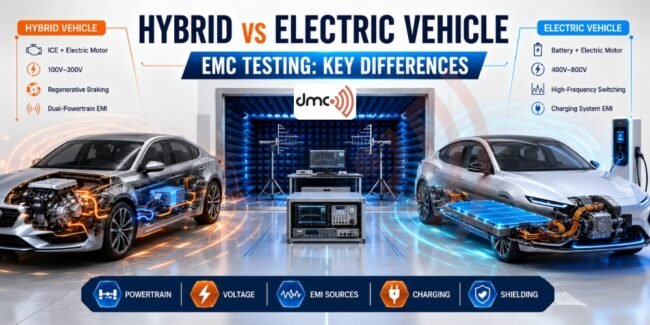
Hybrid vs Electric Vehicle EMC Testing

Hybrid vs Electric Vehicle EMC Testing: Key Differences

Table of Contents What is EMC Testing in Vehicles? Key Differences Between Hybrid and EV EMC Testing Challenges in Hybrid and EV EMC Testing The automotive industry is shifting fast toward electrification, making EMC testing more critical than ever. Hybrid and fully electric vehicles (EVs) rely heavily on complex electronic systems, high-voltage components, and power…

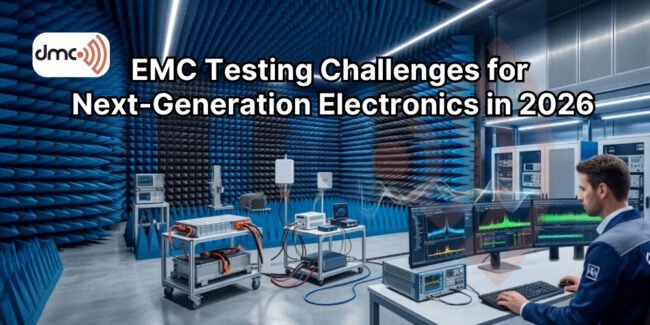
EMC Testing Challenges for Next-Generation

EMC Testing Challenges for Next-Generation Electronics in 2026

Table of Contents Why EMC Testing Is Critical in 2026 Key EMC Testing Challenges for Next-Generation Electronics Impact of EMC Regulations in 2026 EMC Solutions for Manufacturers The rapid advancement of technology has made electronic devices faster, smaller, and more connected. AI systems, EVs, 5G-enabled devices, and industrial IoT technology are all examples of devices…

How Anechoic Chambers Simplify EMC Compliance for EVs

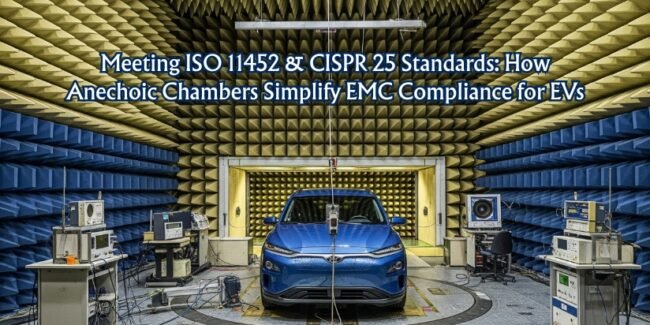
Meeting ISO 11452 & CISPR 25 Standards: How Anechoic Chambers Simplify EMC Compliance for EVs

As electric vehicles (EVs) surge in popularity, manufacturers face a new frontier of challenges—ensuring Electromagnetic Compatibility (EMC) in increasingly complex electronic ecosystems. Compliance with internationally recognized EMC standards, such as ISO 11452 and CISPR 25, is no longer optional but a core requirement for automotive safety, performance, and market approval. One of the most critical tools…