
Table of Contents
- Why you should hire local RF relocation specialists
- How to find local experts — where to look
- Checklist: What to ask prospective vendors
- What a good relocation plan includes
- Cost considerations — what typically drives price
- Day-of-move best practices
- Validation & handover
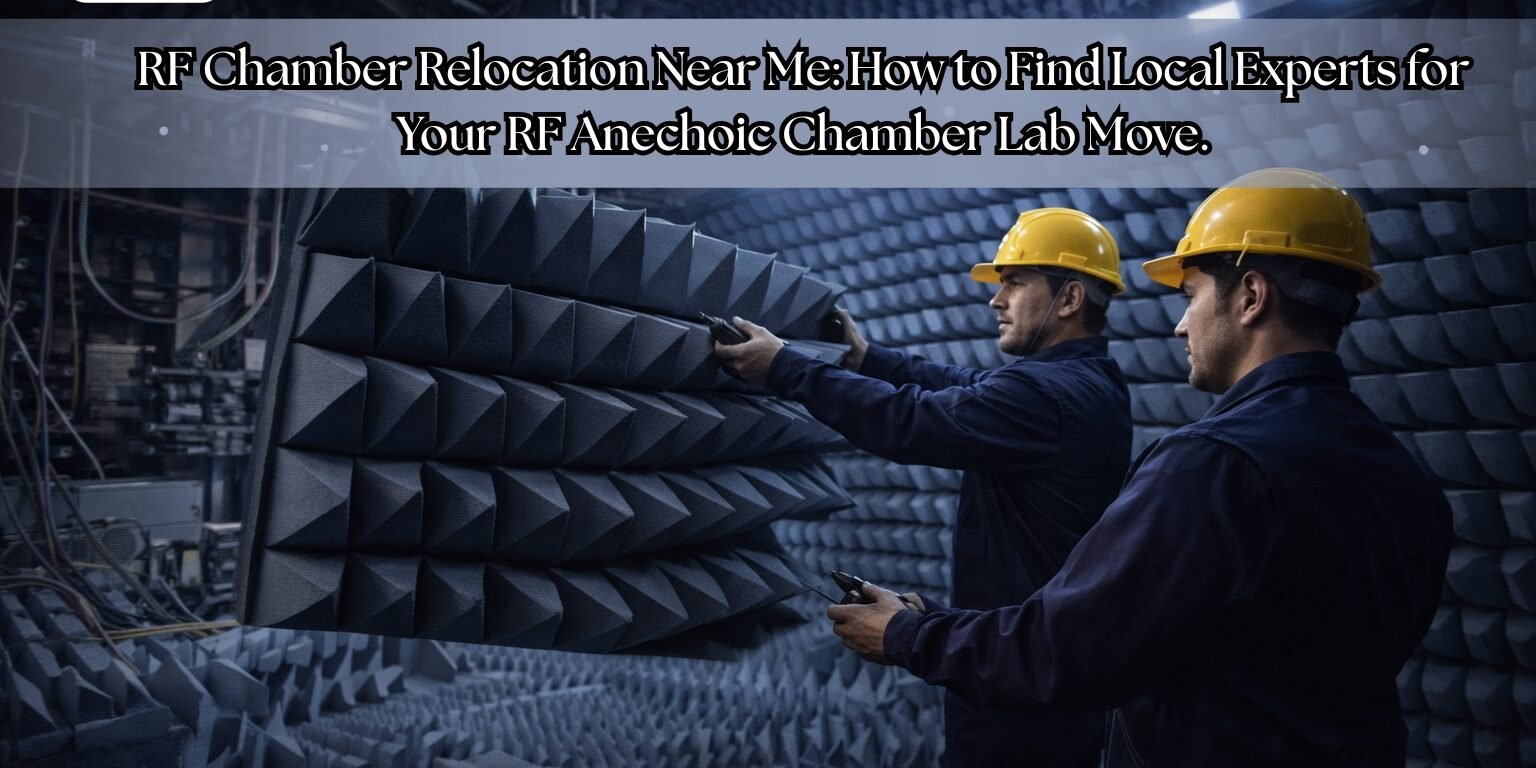
Moving an RF anechoic chamber is not like moving office furniture — it’s an engineering project. Anechoic
chambers contain precision absorbers, shielded enclosures, EM-sensitive instruments, cabling, and often delicate
positioning systems. A careless move can damage equipment, void warranties, or introduce interference that ruins
months of validation work. If you’re searching for “RF chamber relocation near me,” here’s a practical guide to
help you find the right local experts and safely move your RF lab.
Why you should hire local RF relocation specialists
Local teams bring three immediate advantages:
1. Faster response and on-site visits. Local experts can perform in-person surveys and handle unexpected issues quickly.
2. Lower logistics cost and simpler permits. Shorter transport distances reduce specialist transport costs and often simplify regulatory and building-permit coordination.
3. Established local relationships. Local specialists often already work with regional rigging companies, HVAC contractors, and labs — smoothing building access, crane scheduling, and installation inspections.

What makes RF chamber relocation different?
Before evaluating vendors, know what a proper relocation job must address:
- Dismantling absorbers, horn antennas, turntables, and RF shielding panels without damaging RF surfaces.
- Preserving absorber integrity (avoid bending, compression, moisture).
- Maintaining shielding continuity during disassembly and reassembly (RF seams, waveguide-beyond-panel care).
- Handling precision mechanical systems — turntables, positioners, and robotic mounts — and preserving alignment.
- Protecting sensitive measurement instruments (spectrum analyzers, vector network analyzers) from shock and ESD.
- Re-establishing grounding, cabling, and calibration after reassembly.
- Performing post-move baseline tests (shielding effectiveness, antenna patterns, ambient noise floor).
How to find local experts — where to look
Start your search broadly, then narrow down:
- Search terms to use: “RF chamber relocation near me,” “anechoic chamber movers,” “EMC chamber installation,” “shielded enclosure movers,” plus your city/region.
- Industry associations: IEEE EMC Society chapters often know local integrators and certified installers.
- Manufacturers and integrators: Contact the chamber manufacturer (or absorber supplier) — they often offer move services or recommend certified third parties.
- Specialty riggers & heavy-equipment movers: They frequently partner with RF specialists for large-panel moves and crane operations.
- Local labs and universities: Academic labs with EMC labs may share supplier contacts or contractor experiences.
- Trade shows & conferences: EMC and test-equipment shows list installers and service providers; archived exhibitor lists can be useful.
- Online reviews and case studies: Look for vendors who publish move case studies or testimonials specifically describing chamber relocations.
Checklist: What to ask prospective vendors
Use this shortlist during calls or site visits to quickly compare vendors:
1. Experience: How many anechoic chamber relocations have you completed? Can you provide references for similar projects?
2. OEM authorization: Are you certified or recommended by the chamber/absorber manufacturer?
3. Scope of services: Do you offer full-service disassembly, transport, reassembly, grounding checks, and calibration? Or only portions?
4. Engineering survey: Will you perform a pre-move site survey and provide a written relocation plan?
5. Packaging & protection: What materials and handling procedures do you use for RF absorbers and sensitive instruments?
6. Specialized equipment: Do you have precision rigging, custom cradles, climate-controlled transport, and ESD-safe packing
7. Testing & validation: Do you perform post-move EM performance tests, shielding effectiveness checks, and VNA/antenna re-calibration?
8. Insurance & liability: What insurance do you carry (cargo, liability)? Will you accept responsibility for damage to absorbers, shielding, or instruments?
9. Schedule & downtime: What is the projected timeline and expected lab downtime?
10. Costing transparency: Do you provide itemized quotes (labor, materials, transport, taxes, permits)?
What a good relocation plan includes
A professional vendor will produce a written plan covering:
- Site survey results (access dimensions, load-bearing, HVAC, ceilings, door widths).
- Step-by-step dismantling and reassembly sequence.
- Protective packaging and labeling system for each component.
- Transport method (crane, low-bed truck, climate control).
- Mechanical alignment and tolerances for repositioned parts.
- Grounding and EM seam restoration procedure.
- Post-installation testing plan and measurable acceptance criteria.
- Health & safety plan including EHS sign-offs and any required permits.
Cost considerations — what typically drives price
Several factors influence cost:
-
- Chamber size and weight: Larger chambers need more rigging and larger transport vehicles.
- Distance and transport complexity: Long hauls, multiple lifts, or congested urban routes raise cost.
- Absorber rework: Damaged or aged absorbers may need replacement or refurbishment.
- Calibration needs: Full re-calibration of test equipment and turntables can be significant.
- Site prep: Floor reinforcement, HVAC adjustments, or new RF grounding upgrades add to the bill.
- Schedule: Rush or weekend moves often have premium charges.
Ask for a breakdown so you can plan budget and avoid surprises.
Day-of-move best practices
- Assign a single point of contact (POC) from your lab and require the vendor to do the same.
- Lock down sensitive instruments in their original configurations, tag all cables, and photograph layouts for reassembly reference.
- Keep manuals, wiring schematics, and calibration records on hand.
- Limit access to the chamber area to authorized personnel only.
- Be present for the initial reassembly and the final EM test so acceptance criteria are clear.
Validation & handover
A proper handover includes:
-
- Shielding effectiveness (SE) test results and logging.
- Noise-floor and ambient RF measurement baselines.
- VNA and antenna pattern checks to original baseline tolerances.
- Signed acceptance report listing any issues, actions taken, and outstanding items.
Prioritize specialists over the cheapest quote. Anechoic absorbers and shielding seams are expensive to repair.
Document everything. Photos, serial numbers, and calibration certificates make claims and troubleshooting much easier.
Plan for downtime. Budget extra time for unexpected delays and re-calibration windows.
Consider staged moves. If possible, move in phases so your lab retains partial capability.
Frequently Asked Questions (FAQ)
1. What does RF chamber relocation involve?
RF chamber relocation includes professional dismantling, secure transportation, and reinstallation of RF anechoic chambers while preserving shielding performance and absorber integrity.
2. Why should I hire local RF chamber relocation experts?
Local experts reduce transportation risk, provide faster on-site support, ensure regulatory compliance, and minimize downtime during RF lab relocation.
3. Can any moving company relocate an RF anechoic chamber?
No. RF anechoic chambers require EMC-trained engineers with experience in RF absorbers, shielding panels, grounding systems, and calibration procedures.
4. How long does an RF chamber relocation typically take?
The timeline depends on chamber size, distance, and site readiness. Most projects take a few days to several weeks, including testing and validation.
5. Is post-relocation testing mandatory after moving an RF chamber?
Yes. Post-relocation testing ensures shielding effectiveness, noise floor accuracy, and compliance with EMC testing standards.